Behind The Record: Makam
Words by Kristina Kataya
Marking his long-awaited comeback to Dekmantel Records with TARP, we caught up with Guy Blanken to reflect on creative freedom, his early days, the vision for The Archives Live – and, yes, his love for tarps.
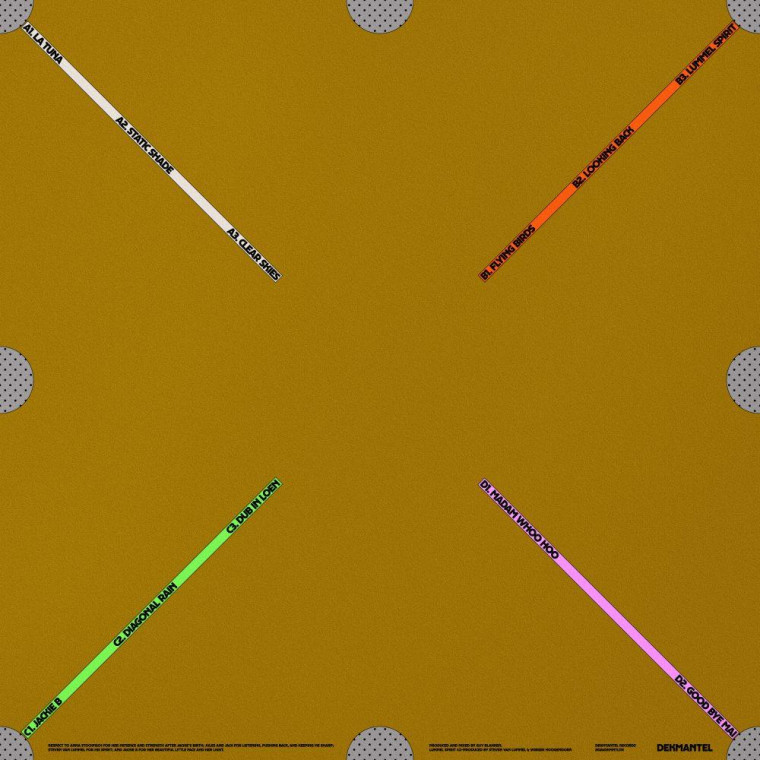
You and Dekmantel go way back. After nearly a decade, what made now feel like the right moment to return – and does it feel like you’re picking up where you left off?
To be honest, there wasn’t really a bigger plan behind my return – it just happened when it felt like the right time. Before I took a break from Makam, I was getting a bit bored with the sound and what people were expecting from me. I felt like I was losing myself in different directions and didn’t really have a clear idea of what Makam was anymore. In the club, it was going in all directions, and I realized I wanted to focus more on techno, so I shifted to Talismann and over time ended up playing only Talismann shows. Now, after a few years of that, it feels different again. I feel like Makam has become more pure – I have a clearer vision of how it should sound, especially in a club setting – and I’ve started to enjoy playing as Makam again.
This album, though, is not really how I typically play in clubs; it’s more of a listening album that I worked on slowly over a few years, and something I wanted to release for myself, without any deadlines. And in a way, I’m not really picking up where I left off – I just let time pass and came back when it felt right. That said, I still play records from back then; for me, some music is timeless, so not much has changed in that sense. The main difference is that now I have more experience and feel more secure in doing what I want to do.
What stuck most with you from those early Dekmantel years? Any core memories?
We were young – it was almost 20 years ago. I’ve known Casper, Thomas, and the whole crew since then. I mean, I’m almost 40 now. But, yeah, we did so many things. We really started from the beginning, in a little office, when they were just starting to organise their first parties and the booking agency. Honestly, there are too many memories to pick just one.
You have two monikers: Makam and Talismann. In your daily creative practice, where does one end and the other begin?
I mostly work on projects, so there’s not really a strict separation. You can see Makam as lighter and Talismann as darker, and it can even change within a day – different hours, different vibes. When I listen to or search for music, I already think in those terms, and in the studio it naturally becomes one or the other.
I don’t really believe in gray areas – Makam moves in the light, where things feel dreamy, deep and playful, while Talismann goes the other way: darker, heavier, more physical. I still enjoy that duality, and now that I’m getting back to Makam, Talismann is becoming more pure again, because I have an outlet for the lighter music, which creates more space for the heavier stuff.
In 2015, the legendary club Trouw, which you loved, closed. A few years later, Makam went on a long break. Do you think the two were related?
They were related for sure. Trouw was my first residency in a club – I had my own night there. It was a very different time; Trouw was a really happy place, not really a techno club. Back then, when I played as Makam, even playing something like 135-136 BPM felt quite rough or dark to people, whereas now that would feel like nothing. Things have really shifted.
After it closed, De School opened, and it invited me to play more dark music. Because of that space – the basement especially – my exploration into darker sounds happened naturally. It’s also the same organization behind both clubs, so in that way they’re connected. De School actually played a big role in my decision to let Makam go on a “holiday.”
However, I think De School shaped me more than Trouw. At Trouw, I was still trying to prove myself – I had my own night, but I was focused on keeping people happy. I was still trying to “fit in”, you know? While At De School, I gained much more confidence. I started to build my sound there, especially as Talismann, from the weekend they opened. I’ve maybe played there around 40 times.
You’ve described approaching this record from a place of ‘total freedom’. Could you define that freedom? And what did that process look like?
Total freedom, for me, meant that I did everything on the album myself. I made the tracks, mixed them, chose them, and decided the order – everything. The whole album is mine, so in that way it was already total freedom. I took as much time as I wanted until I felt it was finished. I didn’t do it for someone else – I did it for myself, because I wanted to release it. There were no rules. If I felt something fit, then it fit. I really followed my instincts.
At the same time, that freedom makes it harder, because no one tells you when it’s done. You have to decide that yourself, and that can take a long time. Sometimes I had to step away from it for months, because I was too deep in it and couldn’t hear it properly anymore. That happened a few times, so the process ended up taking a few years. I always think I’m going to make something quickly, but in the end it always takes much longer.
"The whole album is mine, so in that way it was already total freedom... At the same time, that kind of freedom also makes it harder, because no one tells you when it’s done.”
For Than Sadet, you traveled to Thailand to find your inspiration. This time, what kind of environment allowed you to build such a vast ‘landscape of sounds’?
Some of the tracks on this album were actually made in the same period as Than Sadet. Overall, the tracks on TARP were created over the last 10 years, in many different places. Some were made in Thailand, but others were made while traveling or at home – so there isn’t one specific environment behind it. With Than Sadet, it was really a concept tied to one place, with nature sounds and a clear landscape. For this album, I didn’t want to be that strict, because that wouldn’t feel like freedom anymore. I didn’t want to force everything into one setting – on TARP, anything can happen.
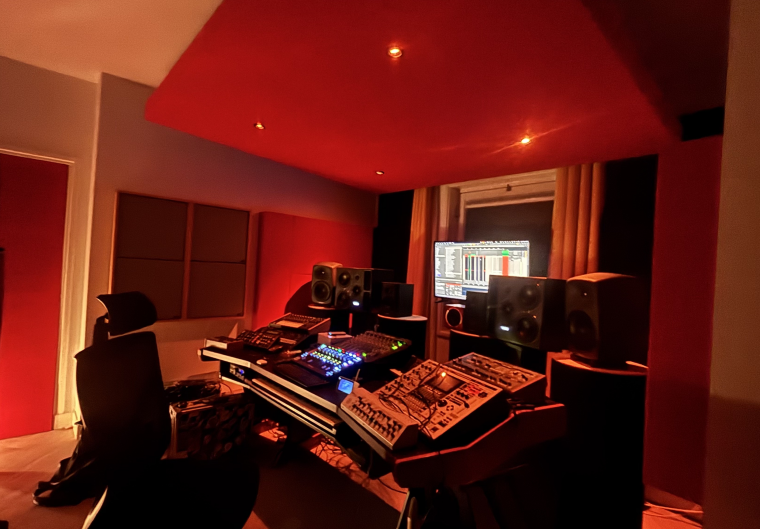
Whenever I travel, I always take my MC-909 with me and use it like a sketchbook. I make quick ideas – notes and patterns – that I later bring back home and develop further. Most of my initial ideas actually come when I’m not in the studio, because the studio feels more serious; when I’m outside of it, working with only one machine and a keyboard, is personally a better way to create freely and capture simple ideas.
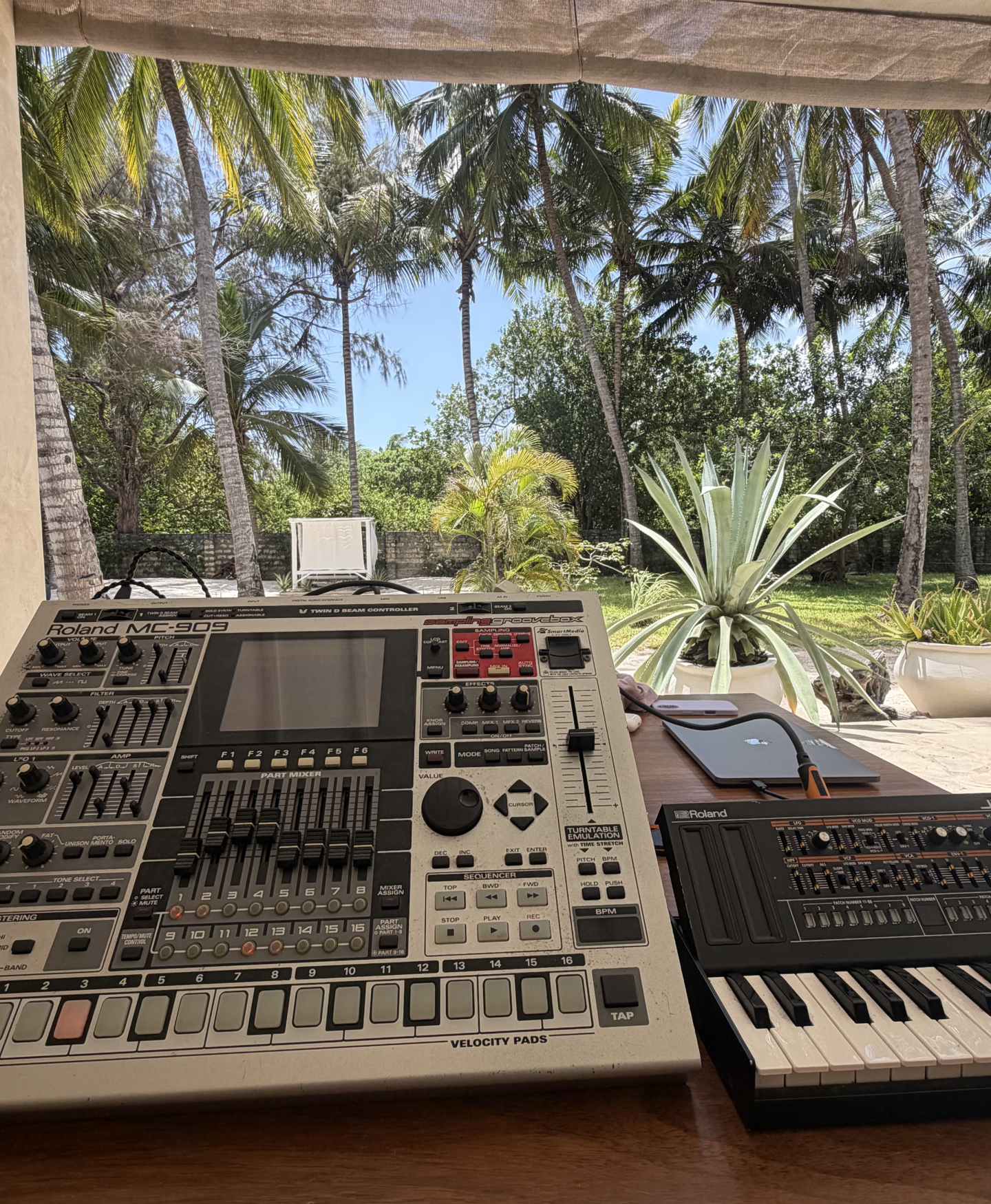
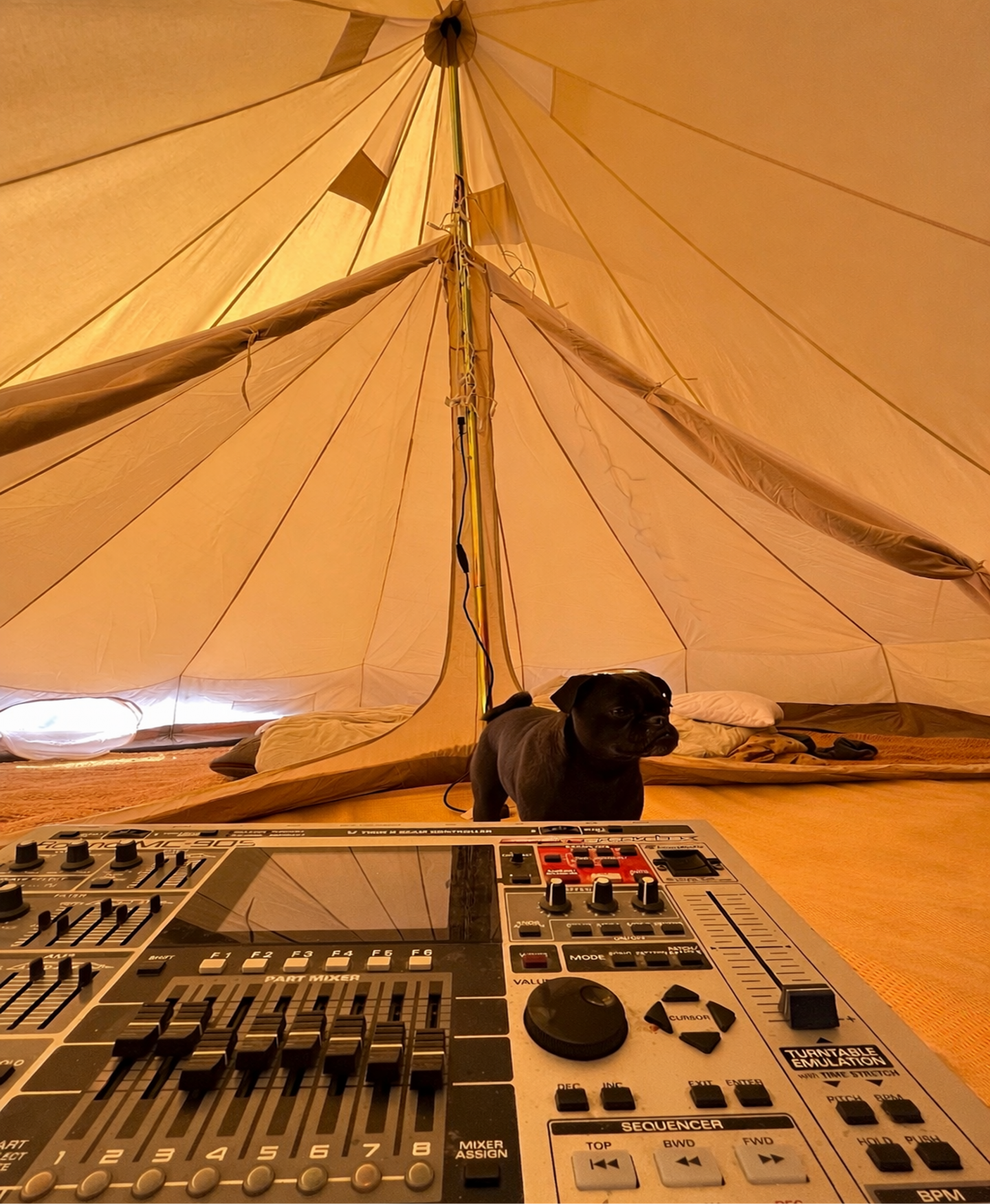
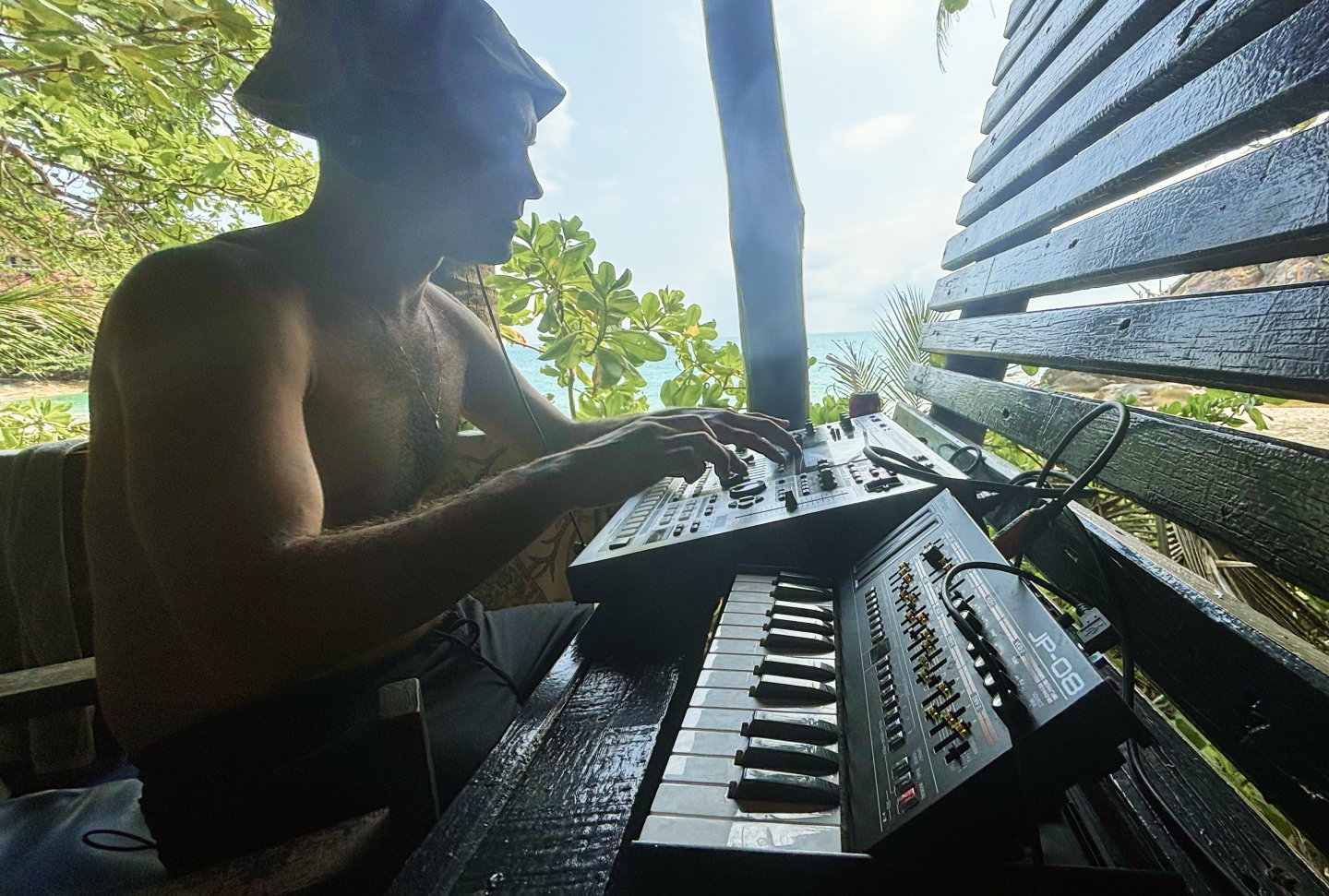
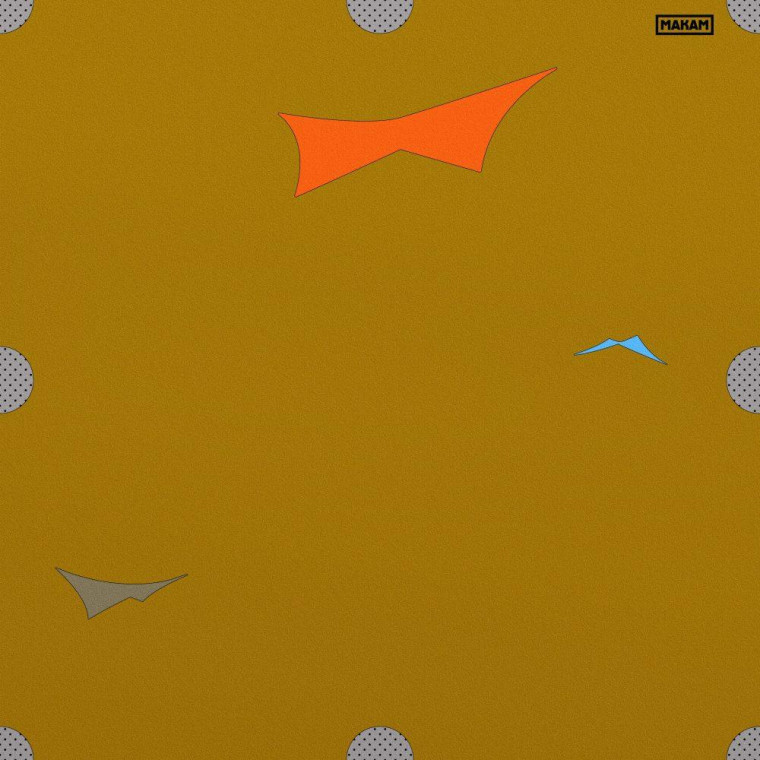
The word tarp TARP feels very utilitarian. Does that title reflect the music itself, or is there a story behind the name that we’re not seeing?
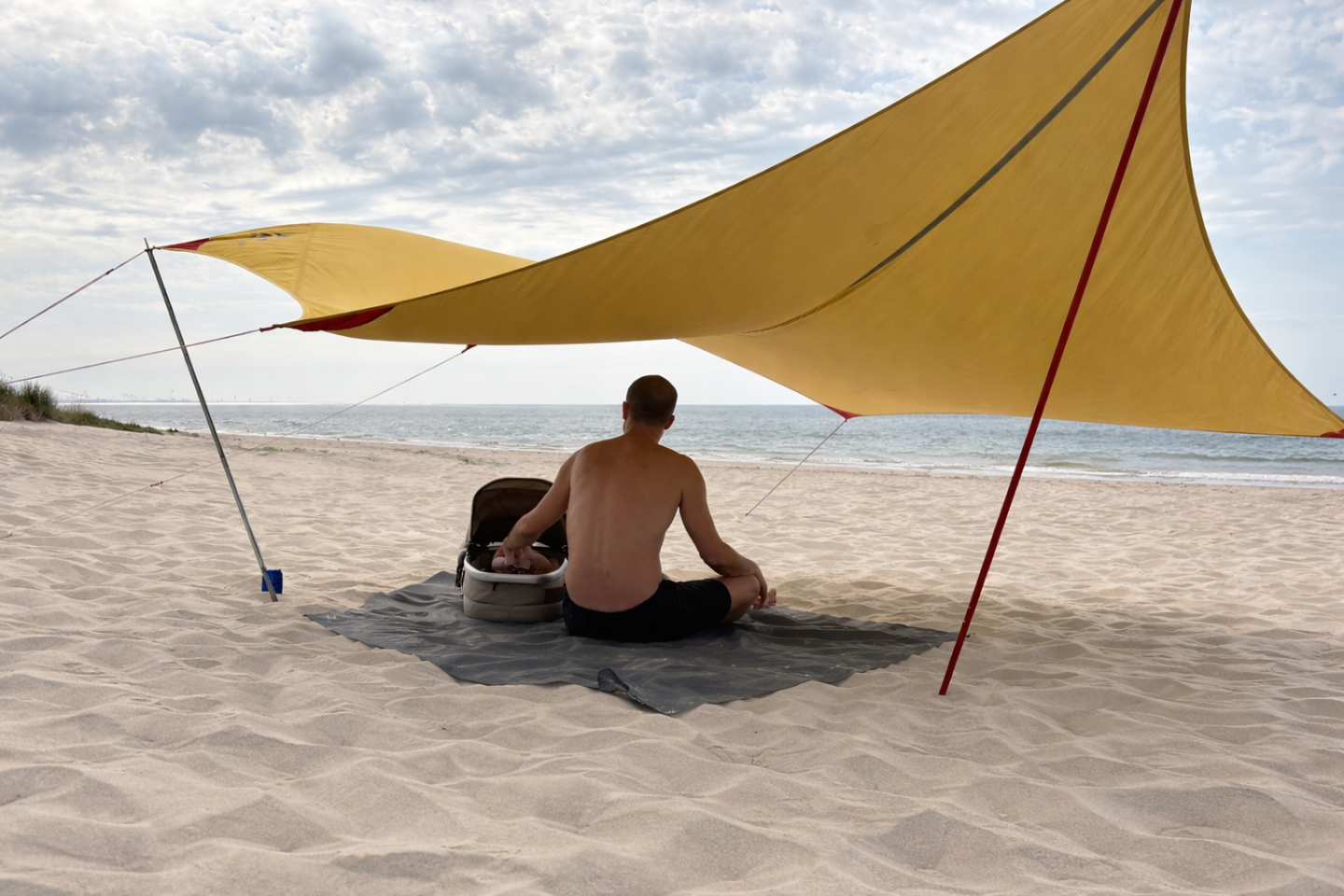
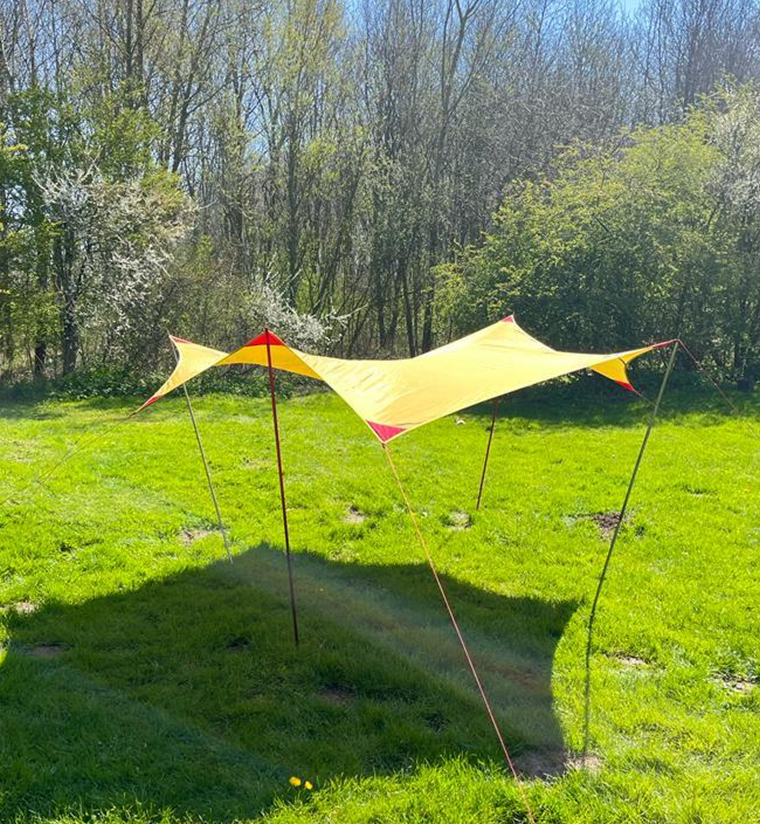
A tarp is a tent! In fact, my friends would laugh at this, but I am a tarp-freak. I’ve had a few tarps over the years, and a few years ago I bought a really expensive but beautiful one that I take with me to the beach. It makes me really happy. I sit under it because I don’t like the sun – it creates my own shadow space, and it immediately feels very cozy.
There is a link to the album. If you imagine listening to it while sitting under a tarp, that’s kind of the vibe – relaxed and light. Anything can happen: rain, clear skies, people passing by. It’s a happy place, but also a kind of shelter. In my mind, it’s about that perspective – being under the tarp, looking out, seeing flying birds or whatever is happening around you. It’s more about creating a space or a feeling than telling a specific story.
There’s a heavy dub sensibility threading through this whole record, especially in tracks like ‘Diagonal Rain’ and ‘Clear Skies.’ What inspired you to explore the intersection between dub and house?
The dub influence was always there. Even before, if you listen to older Makam tracks like Glacial Valley or Clearings, there’s already a kind of dub techno in it. But back then it was more on the techno side, not as organic. I’ve been listening to artists like Basic Channel and Rhythm & Sound for many years, and dub is one of my favourite types of music to listen to – at home, in the car, everywhere. So in that way, it felt very natural. I think I just didn’t find the right moment to fully explore that intersection before. With this album, because I had total freedom, it finally felt like the right time to do it.
Do you think of TARP as having a specific emotional or narrative arc? As listeners move through the record, is there a journey you hope they experience?
I don’t really think in terms of storytelling. I hope the music hits something for people, of course, but I don’t have deep intentions. For me, everyone experiences music in their own way, so I just focus on whether I like it myself and hope others like it too. I just make music because I feel like I need to, and I hope people feel some warmth – that it does something in their body.
At the same time, I do like things that are imaginable. You can picture yourself in a narrative – somewhere like under a tarp on the beach or in the woods – but that’s something you’re free to choose for yourself. The track name can help with that.
"I just make music because I feel like I need to, and I hope people feel some warmth – that it does something in their body."
While listening to your new record, I really felt the rich home-listening energy, but there are also some tracks that feel more club-oriented. What kind of vibe did you envision for the dancefloor?
I didn’t really have a specific vision for the dancefloor while making the album. Even with the more club-oriented tracks, also with tracks like ‘Flying Birds’ and ‘La Tuna’, I wasn’t imagining people dancing when I was working on them – that’s not my inspiration point. You have to understand, I’ve known the tracks on the album for so long; especially last year, the process became very technical – mixing, finishing, making sure everything sounds right and cohesive. At that stage, it’s a different kind of creative work, more precision-focused. Ha, it’s not that "romantic".
Some tracks do work in a club, though. I’ve played tracks like La Tuna, Jackie B, Static Shade, and Flying Birds, and I’ve seen people dance to them. But for me, they also work just as well for listening at home. So I see the album as something in between – it’s not purely an experimental album or purely a club album. It sits on the bridge between the two.
You’ll be performing Makam presents The Archive Live at Dekmantel Festival this summer. What can we expect?
The Archives Live will be a hybrid live show, blending unreleased Makam material with older Makam tracks. I’m still in the middle of shaping it, so I don’t fully know yet what it will become – but the direction is clear. The Archives will also take form as a series of releases on my label Amulet, focusing on older Makam tracks I still connect to but never released before. There’s a natural bridge between those records and the live show. How it will sound in the end, exactly, I don’t know yet.
Lastly, what’s next for Makam? Any projects you’re excited to dive into, either before or after the festival?
I’m working on The Archives, which I’ll release on my own label, Amulet. I’m also working on a Dekmantel podcast, and there’s a new Talismann track coming out soon. At the same time, I’m moving my studio to The Hague, and I recently became a father, so there’s a lot going on. Before, I could just come home and chill, and now I chill with a baby – but it took time to get there. I like to keep busy, though. For the coming months, I just want to play around with equipment and not focus too much on finishing projects. Finishing things can be quite intense, so I’d rather freak around for a bit. At the same time, The Archive Live at Dekmantel Festival is a massive project I can lose myself in – so there’s enough to do, for sure.
I’ll include a few tracks I’ll be using this summer in the upcoming Dekmantel Podcast. I have an idea for it, but I’m still figuring out which direction I want it to go. When I make a podcast, I always want to do something special with it, not just a regular mix.
As for my set at Dekmantel Festival, after all these years, I feel like I trust myself much more. I trust my taste and the direction I want to take – I just want it to sound like Makam.
In music, I trust myself completely, and I’m really happy about that.