Between the stages:
There is a moment, somewhere between late afternoon and nightfall, when Lentekabinet begins to fold in on itself. Not in scale, but in perception. Paths that feel open and scattered in daylight narrow into intention. Sounds bleed into one another. Installations become stages, stages become ecosystems. You stop navigating the festival and start drifting through it.
At Het Twiske, this drift is by design: art, nature and music as storytelling.
Lentekabinet positions itself as something softer than its late-summer counterpart: a spring ritual rather than a peak-season statement. That softness is a deliberate choice, a way to lower the volume of spectacle so that smaller encounters can come into focus. Beneath it sits a carefully built network of micro-worlds, temporary scenes shaped by collectives, artists and spaces that define Amsterdam’s cultural underground as much as any club or institution.
Where larger festivals often separate music from everything around it, here stage design, local communities, visual culture and the landscape are programmed as one ecosystem. The brief is not just to fill slots, but to distribute authorship: give scenes and spaces room to write themselves into the weekend. What emerges is not a side programme orbiting the main event, but a festival grammar of its own.
When Sophie Kemperman works on the cultural programme, the starting point is not a theme but a question: who needs to be in the room for this to still feel like an Amsterdam festival? The answer, the how and the why, is practical as much as conceptual: stay close to local representatives, institutions and talent development, and invite them to build their own chapters inside Het Twiske.
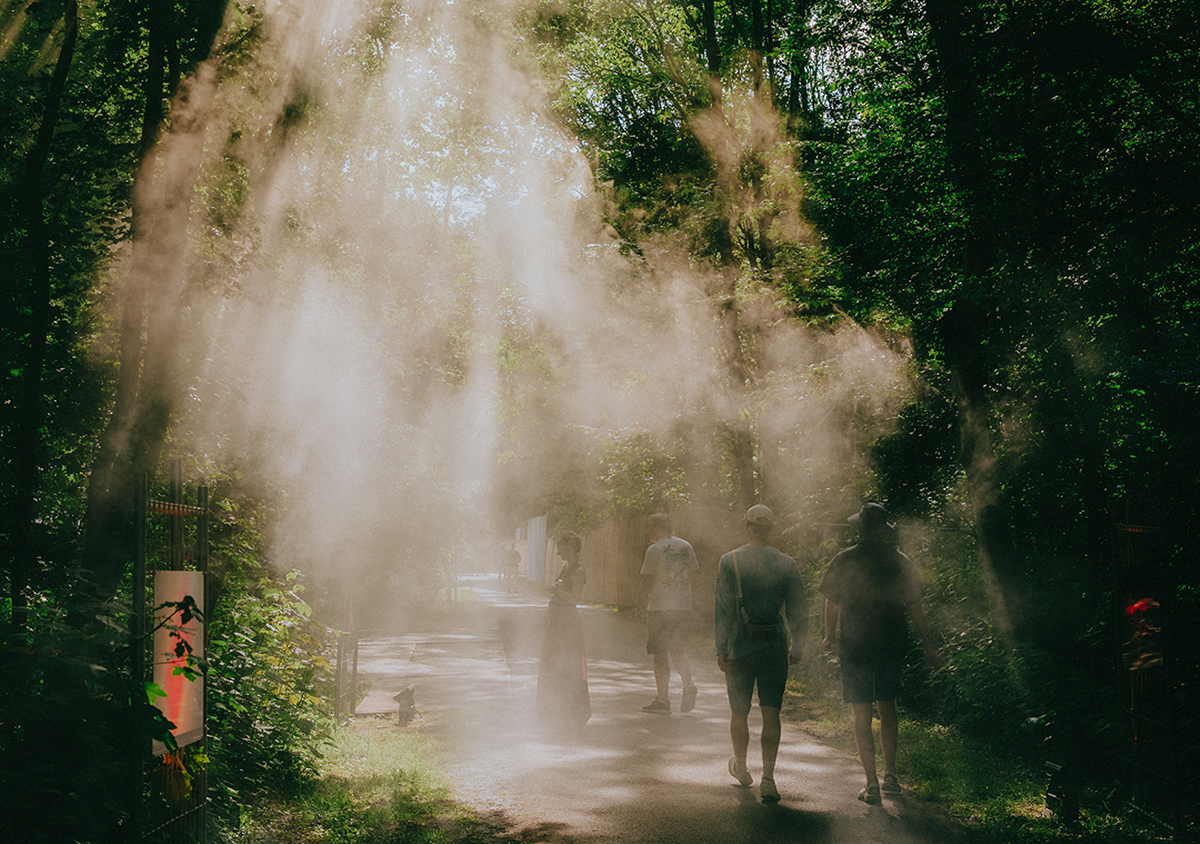
Even the visual landscape is treated as a route for this question. Along the path to the Lotus stage, art does not arrive as a billboard-like interruption but is folded into the flow of movement, visible mainly to those who are willing to look beyond the timetable. You encounter it mid-conversation, mid-transition, until you realise it has gently redirected your attention. A semi-hidden route turns into an open-air gallery showing eleven works by Rietveld Academy students, the result of an open call that asks the school to step in as a partner rather than a supplier.
“De dag is van glas maar o de bomen,” the opening line of Maria Barnas’ poem, forms the curatorial thread for Sophie and Tom van der Veen, who, together with two collaborators from the Rietveld, co-curated the works and developed a community program in the lead-up to the festival. The line is not just a title but a prompt: think about fragility, landscape, reflection. From forest photography to colour-hallucinating graphic design, the works hold the festival in a different register, grounding it in something that does not begin or end at the soundsystem.
For Andy, one of Lentekabinet’s self-described “locals,” a set begins long before the booth. It starts with the same bike ride every visitor takes through the nature reserve. “The route of the visitor was my starting point,” she explains. “The nature and trees of Het Twiske shape the atmosphere. Nature is fully incorporated into my set.”
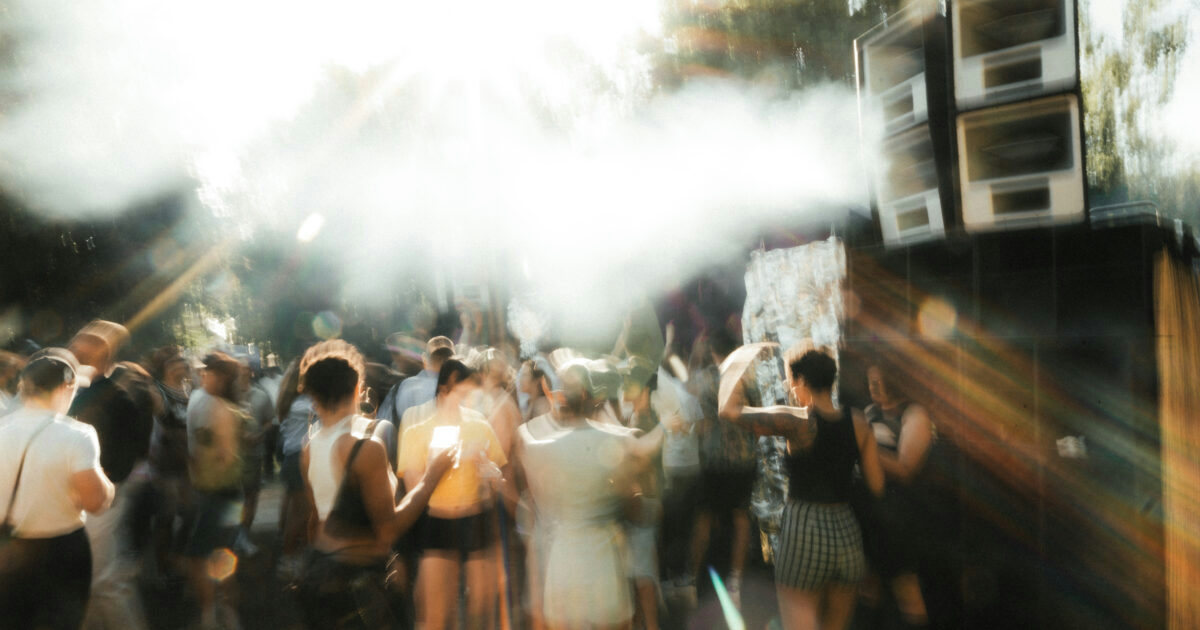
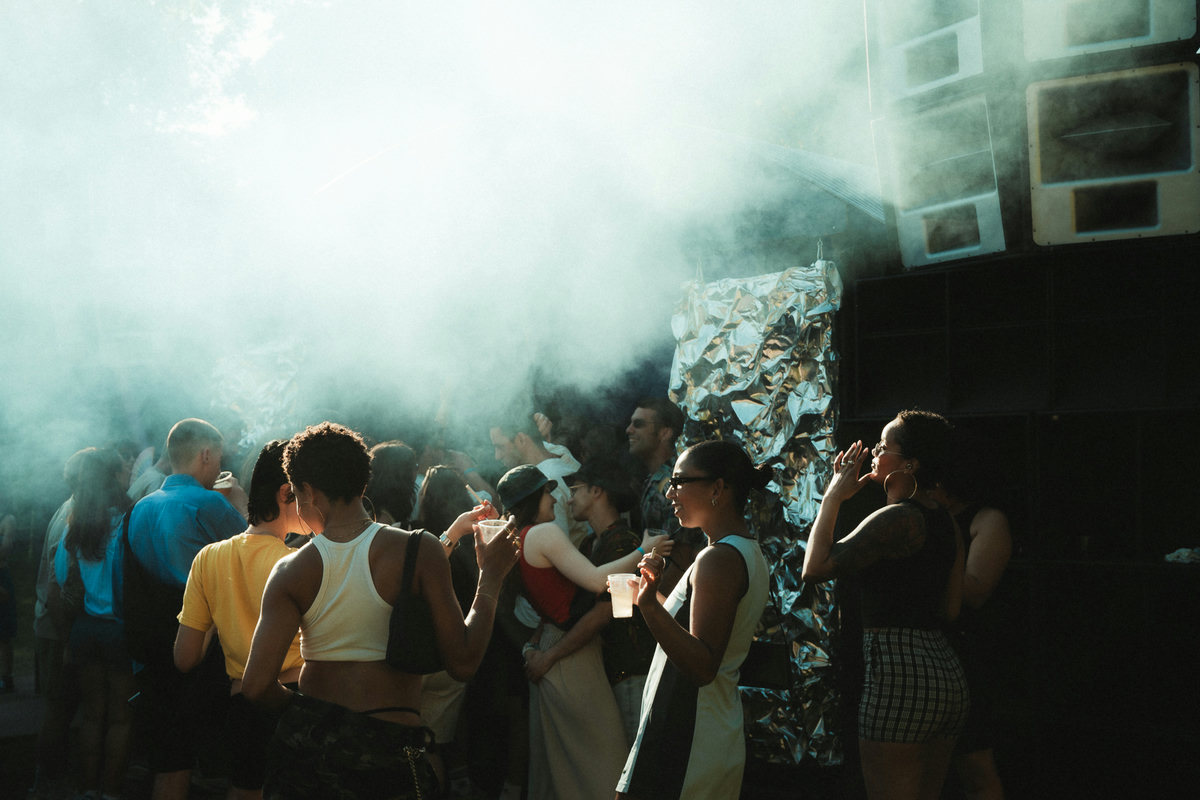
Next on, the stage evolves. Metal, steps, a new position of the booth: “When I heard about the new design for Lotus, I immediately imagined myself within the stage. With the booth further forward, it feels more interactive. My sound needs to resonate with that.” Design decisions like moving a booth outward are not only aesthetic; they are small tools for shifting the line between performer and crowd, encouraging eye contact, conversation, and risk.
Those shifts demand something from the artist. “I played more dubby and spacious than I normally would for an opening,” Andy says. “Community is everything to me. I always curate for who is there: e.g. artists, dancers, crew. That is inseparable from playing well.” The programming logic is similar: invite people who think in terms of “who is here” rather than “what is my set”, and a local slot becomes a responsive one.
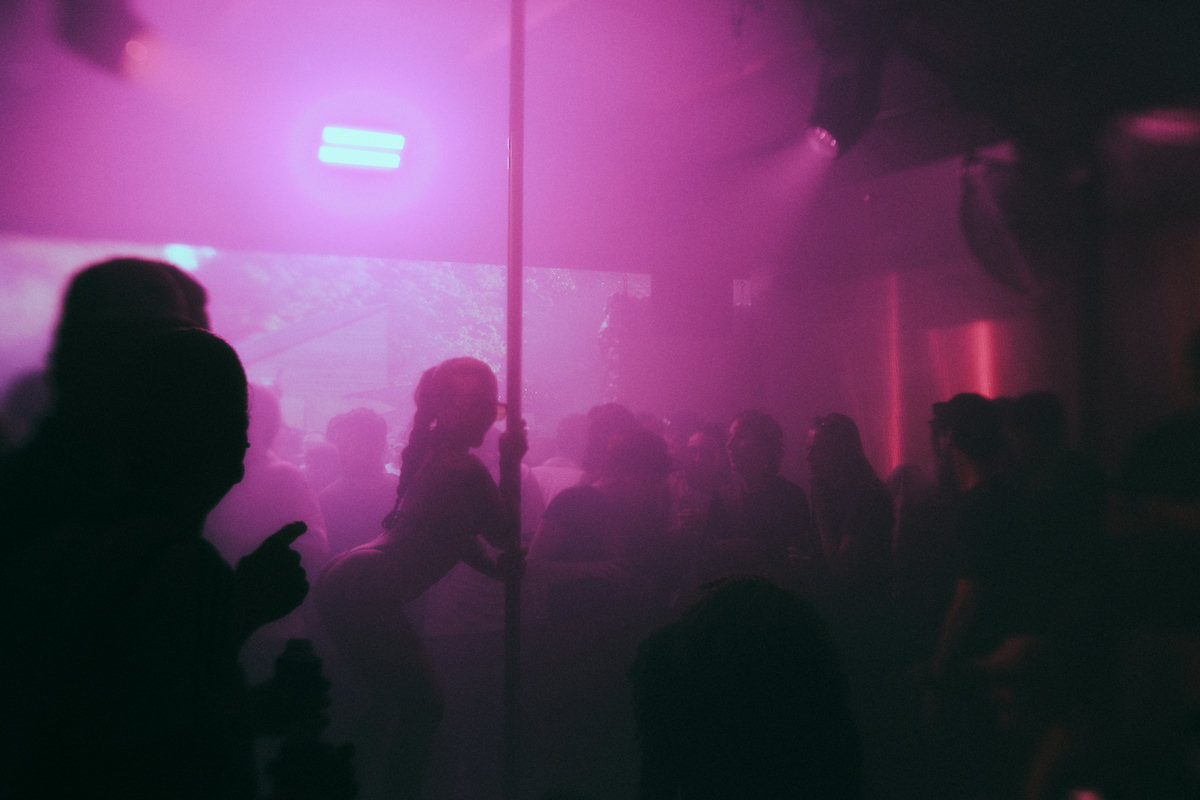
At Striptopia, tucked away but never fully concealed, that logic becomes spatial. Under saturated purple light, the space oscillates between performance and participation. A pole stands at the centre, not as a fixed spectacle but as an open proposition. Dancers move first, demonstrating grips, catching hands, gently insisting that shyness is temporary; visitors follow, cheered on by strangers and watched over by crew. Consent is explicitly asked, boundaries are clearly named, but comfort zones are treated as material that can stretch.
What starts as a pop-up concept now has its own mirrored environment, intentionally set apart yet woven into the flow of the day. In programming terms, Striptopia is invited not to “add a show” but to bring a culture. For Striptopia’s founder Maggie, pole is not an accessory to the music but an art form and culture in its own right, one deeply entangled with club history and musical evolution: “think of the historical Atlanta strip clubs to hip-hop and dancefloor lineages and what they did to the dancefloor.”
Outside, the structure reflects the festival back at itself. Inside, it becomes a more private world of purple light, screens, bodies and self-awareness. There is something quietly radical in how little distance exists here between watching and doing.
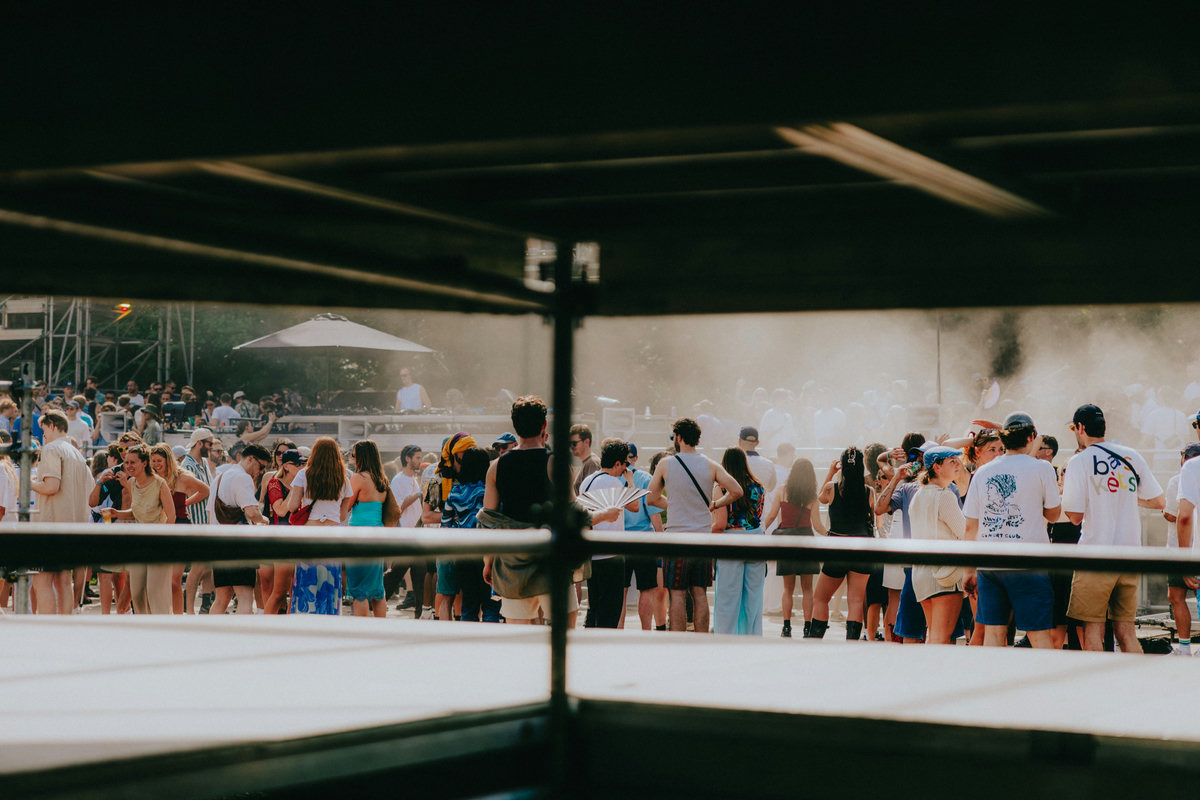
Elsewhere, The Aster stage is built as a hinge between live music and DJ culture, and between local scenes and the broader programme. Saturday is co-curated with Kazerne Reigersbos, a community centre and cultural hub in Amsterdam Zuidoost, so that a part of the city that usually exists off the festival map temporarily holds the keys to a main area.
For Nassim Kajouane from PIP Radio, who curates The Aster on Sunday, the question guiding his selection is not “what is most hyped” but “what is happening around me in The Hague right now, and who is not being seen.” That starting point – place first, profile later – shapes a line-up where artists like Abiba Sokoto, but also Brintex Collective, a six-piece experimental jazz group who won Lentekabinet's band contest, offer another kind of depth: conservatory-trained but unafraid to experiment, grounded in an Alfa Mist-adjacent hip-hop-jazz lineage while pushing into club-informed electronic territory.
Between these nodes, a pattern appears: the festival does not centralise experience in a single main stage, it distributes it across collectives. PIP and Kazerne are not hired to decorate; they carve out temporary territories with their own rules of entry, their own tempos for how quickly someone feels at home. That is both a conceptual choice and a practical one: sharing curation means sharing responsibility, power and care.
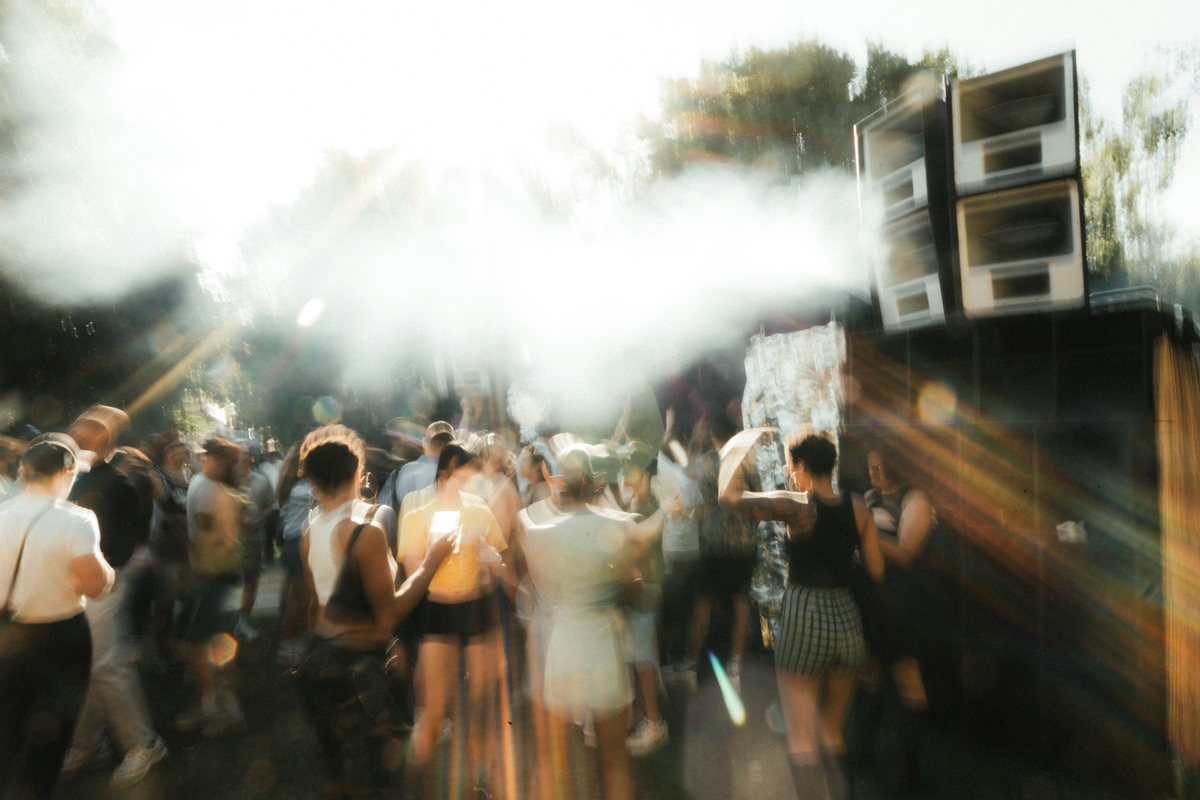
Abiba describes The Aster as a place where this is felt directly. Because the area feels less solemn and more like a street corner – her “London carnival” metaphor – she feels freer to make bold musical choices, crossing genres without apology. A design that looks playful from afar is doing something very precise: it lowers the stakes just enough for risk and experimentation to become possible in front of a crowd.
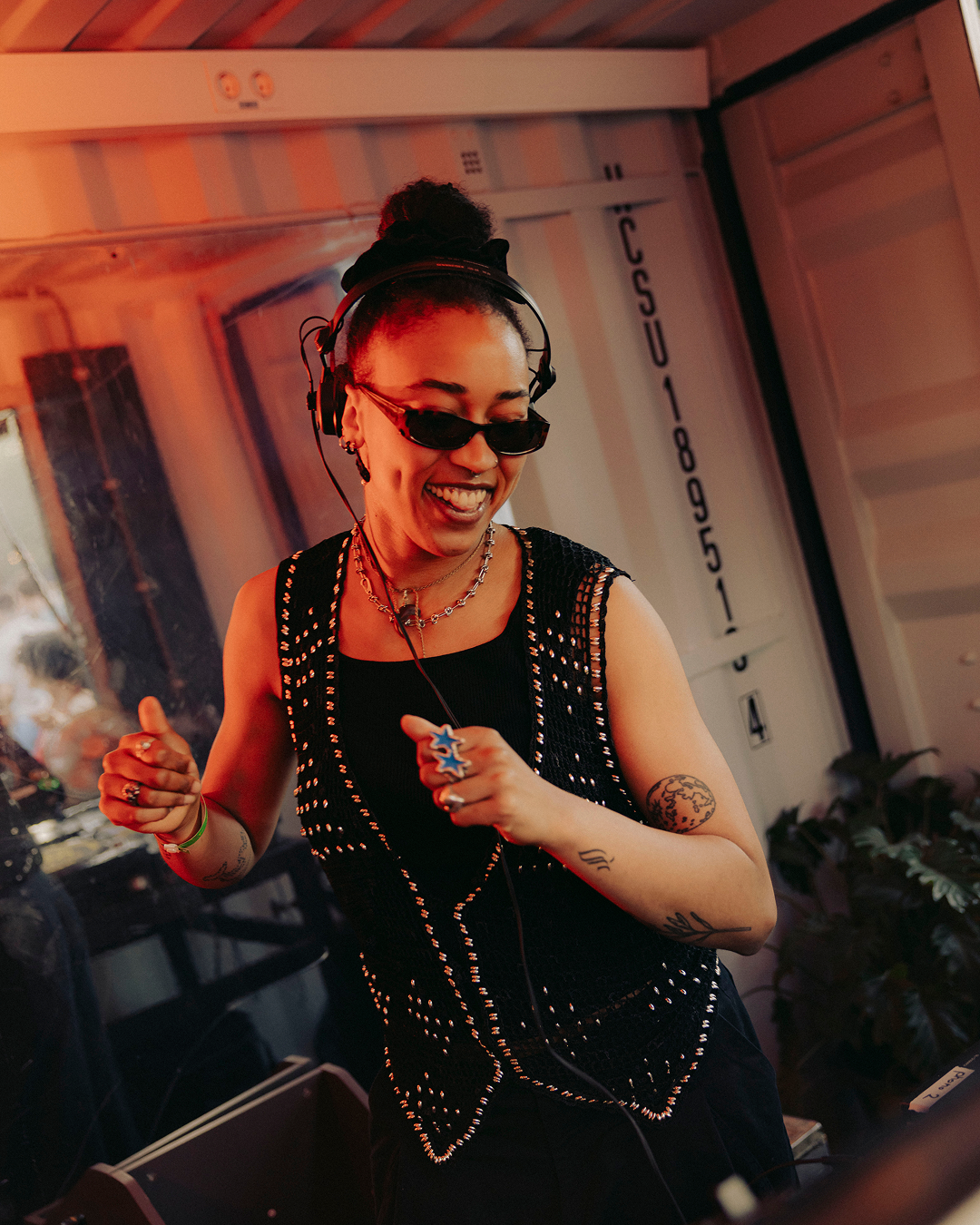
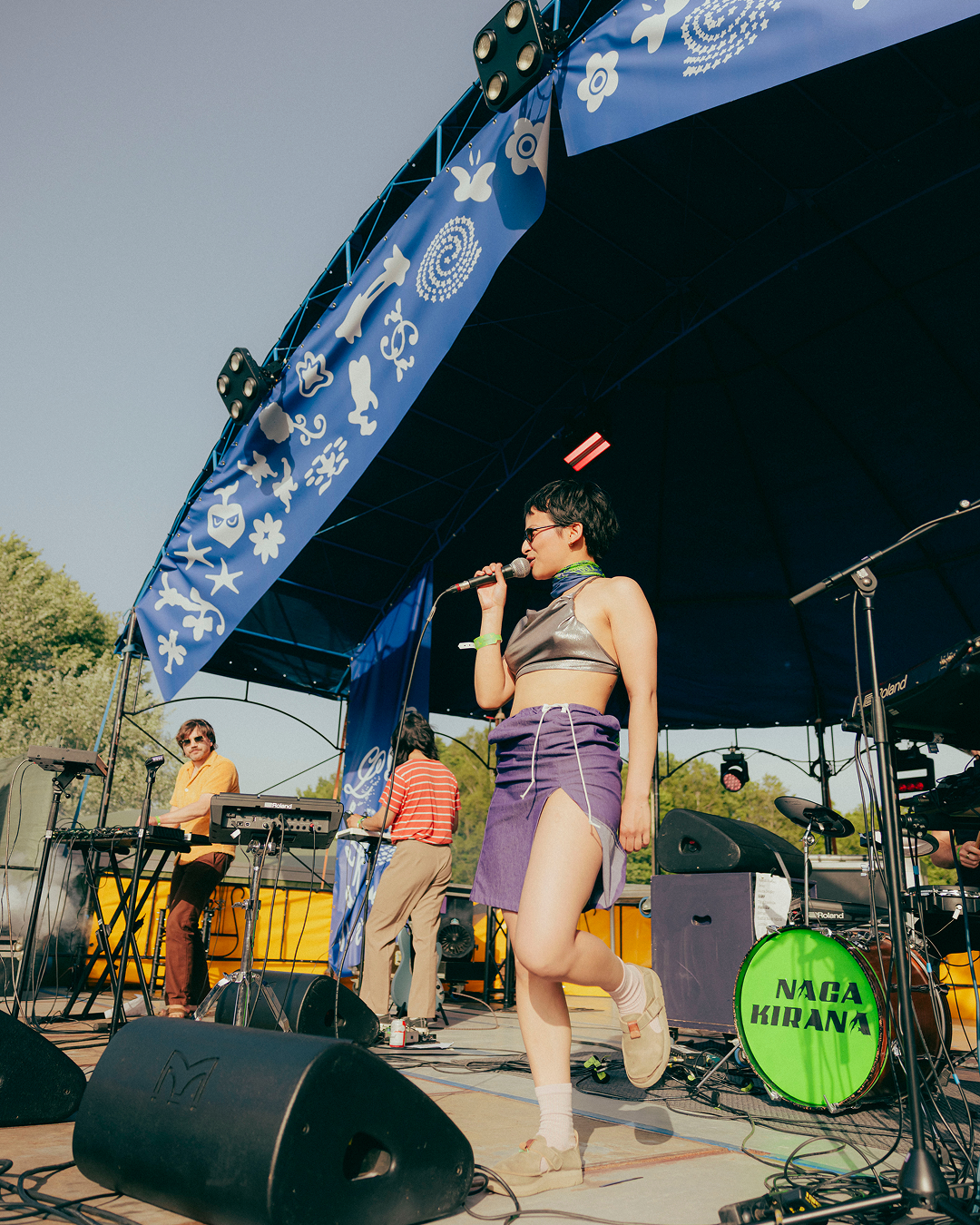
T.NO’s weekend unfolds across two different infrastructures, and that duality is written into the programme on purpose. Early in the day, opening The Swamp, the DJ/producer starts with ambient and slowly pulls in percussion as people arrive. The ask here is clear: do not rush, sketch the outer edge of what this system can hold, think about the acts after you. The narrative arc, not just the time slot.
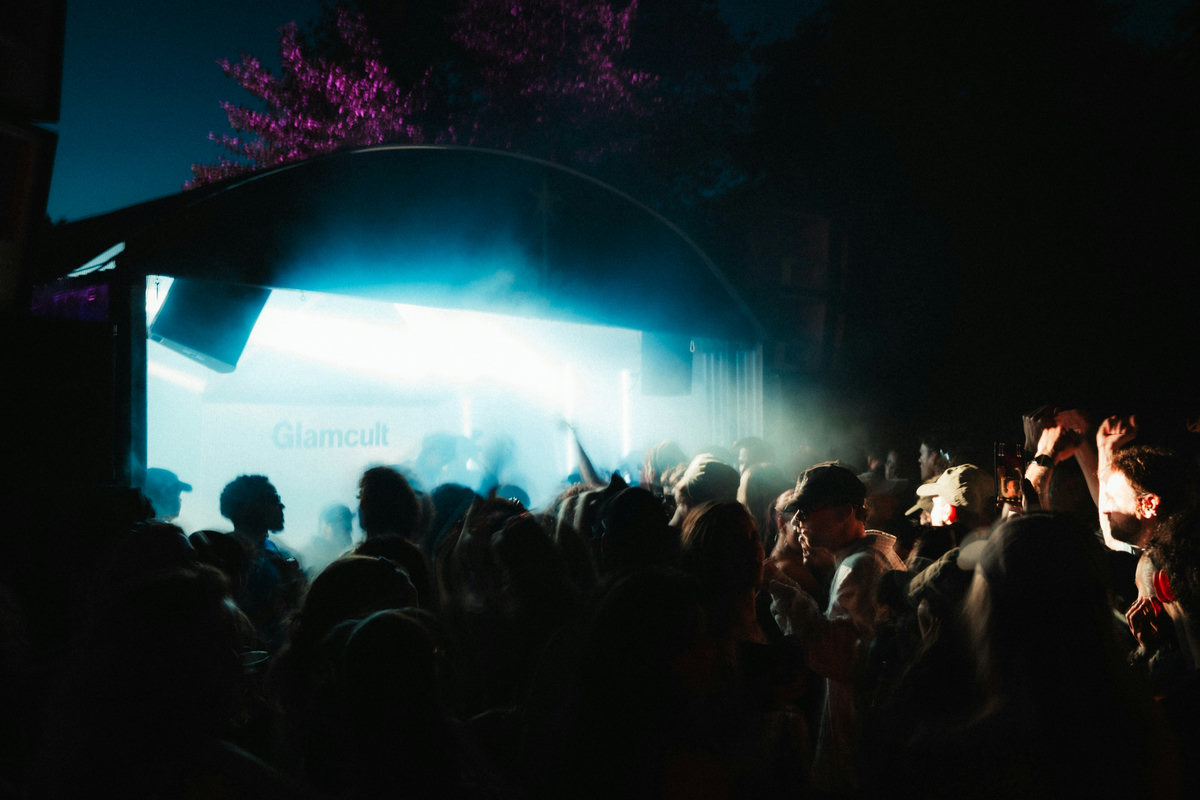
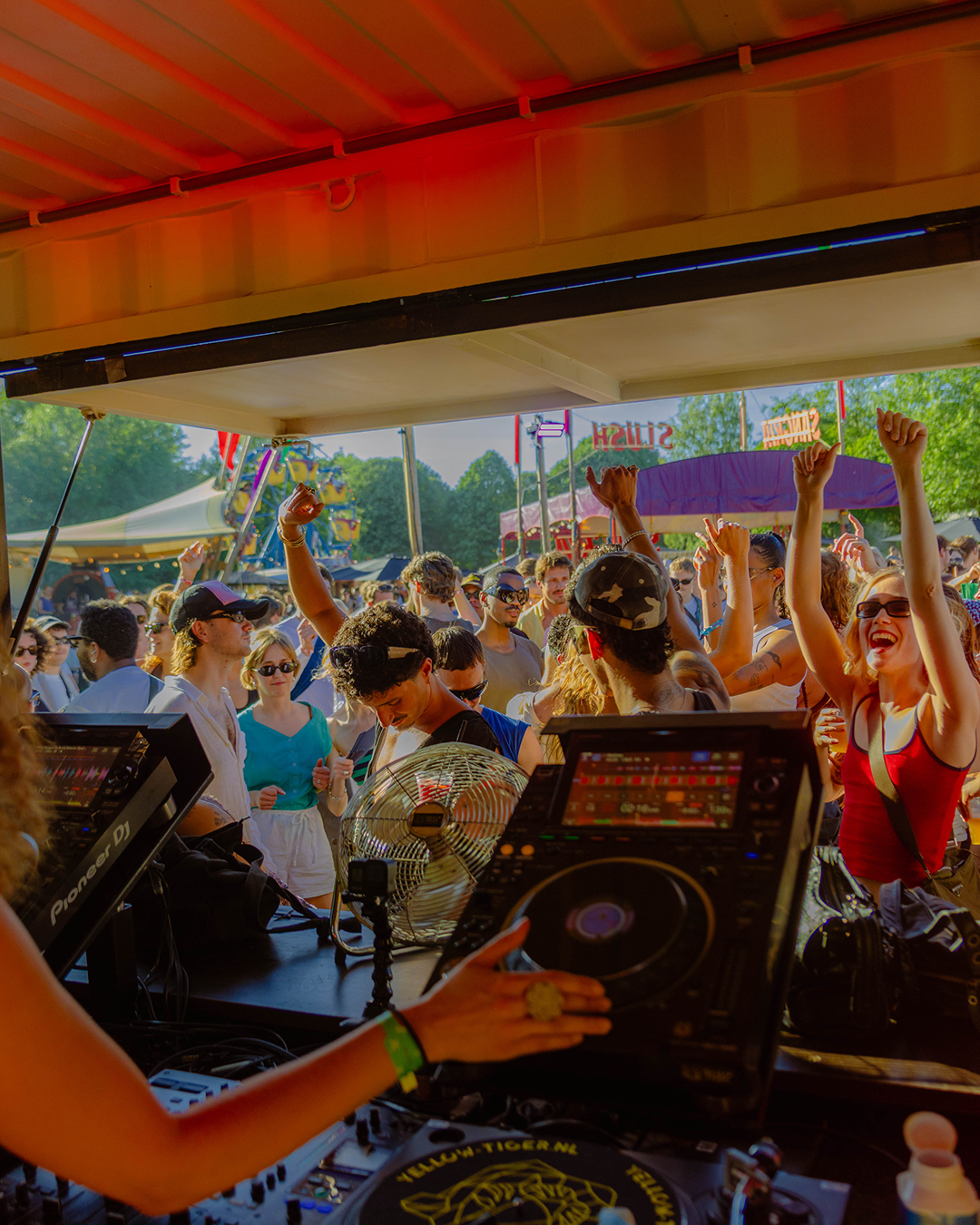
The set pushes him into a softer register than usual, working with tracks he loves privately but rarely plays out. By evening, at Glamcult, the energy, booth layout and surrounding crowd invite another version of his sound: more percussive, more pressure, more spontaneous. A track he finished the week before slips into the mix; a planned handover turns into an unplanned back-to-back with Manuka Honey. The programming intention is visible underneath: give artists more than one context, and they might show more than one self. When asked how he would introduce himself to someone who has never heard him, his answer stays simple: “Come by and find out.”
On Saturday, Kazerne Reigersbos brings Zuidoost to Het Twiske. On a map, the two sites sit far apart; in the line-up, that distance is briefly suspended. Kazerne’s takeover of The Aster is framed not as a “guest spot” but as a temporary shift in authorship: for a few hours, the logic of a neighbourhood hub – where people drop in, stay, return – overwrites the usual festival logic of passing through.
The result feels more like a block party than a showcase: a stage full of friends and collaborators during Sterren Stralen Overal, followed up with Barry White pouring from the Funktion Ones, with founding father Maatje Paatje holding court. Conceptually, the decision is straightforward: if you want to talk about “local” beyond the centre, you hand over the actual sound system, not just a slot at the edge of the timetable.
Glamcult enters from yet another angle: a magazine-turned-stage that treats the area as a live issue, edited in real time. Founder Rogier Vlaming describes their role as offering another colour, sound and entry point, one that sits a little to the side of the obvious without tipping into exclusivity. Their long-standing interest is in translating subcultural energy into image and narrative; here, that instinct is extended into structure and timing.
Where most stages are designed around the why, the sound first, Glamcult shares a structure with Striptopia and works outward from design. The booth is pushed forward, the space held more open than in previous, more inward-looking experiments. The gesture is small but pointed: light, sightlines and distance are treated as editorial tools. The aim is not to make things easier, but more permeable – to replace the feeling of “this is not for me” with “I am curious, I choose to step closer.”
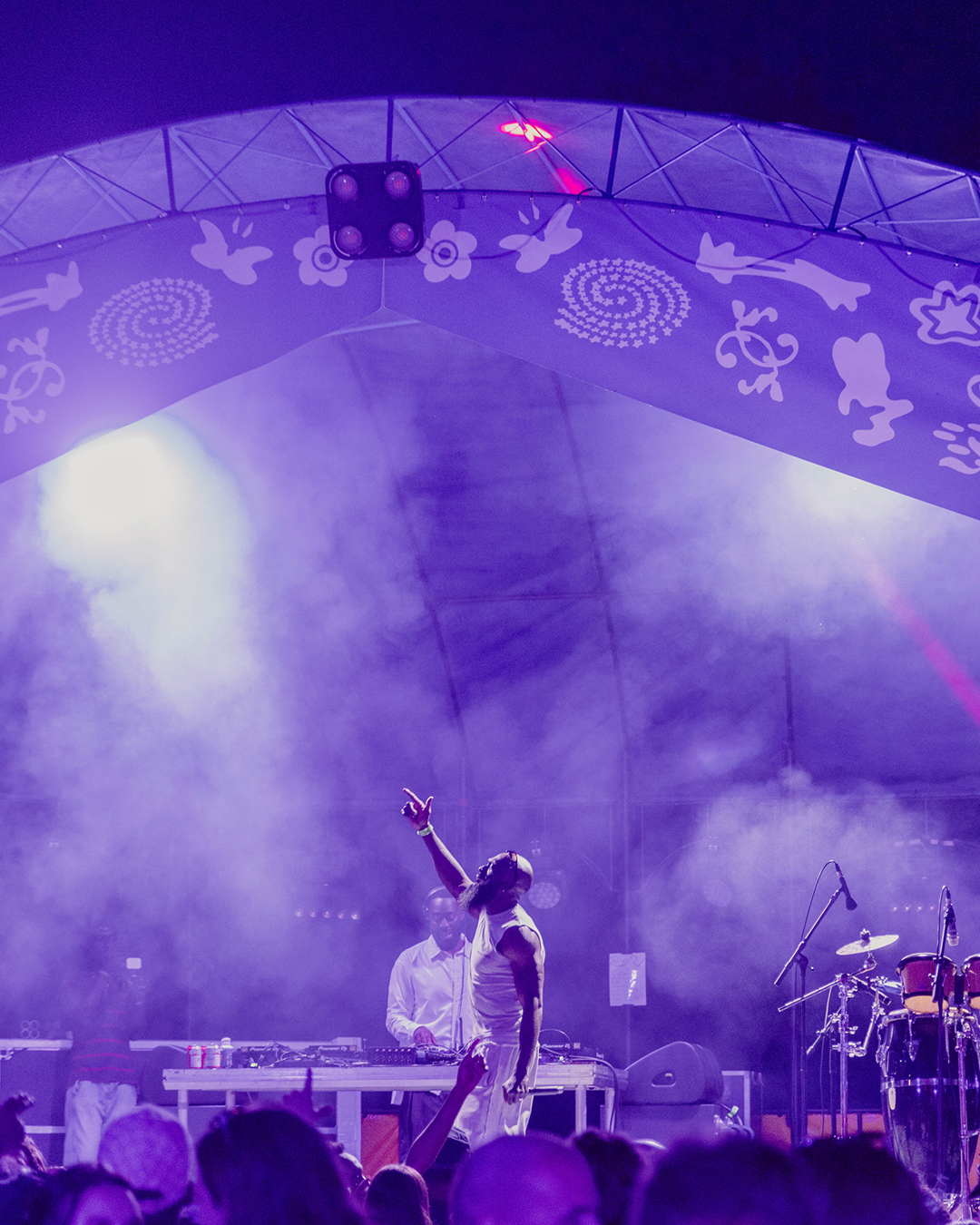
By the end of the weekend, this layered approach starts to read as the festival’s real signature. Not one singular sound, not one dominant scene, but overlapping temporary worlds in which different communities hold the pen for a while. Each asks visitors to step a little closer, stay a little longer, and notice how culture is actually made: in rehearsals, in collectives, in neighbourhood hubs.
At Lentekabinet, the most interesting moments do not only happen onstage. They take place in the exchange between artist and setting, between local scene and broader platform, between what the festival lays out and what its communities contribute. Conceptually, the choice is to treat community not as an add-on but as the organising principle; practically, that shows up in who gets to design, curate, host, and discover.
This is perhaps where Lentekabinet’s identity becomes most visible: in the in-between.