Designing the Moment
We all know that feeling of crossing into a festival realm: the road leading up to it, the beat growing louder, passing the ticket check, finding your first dance floor, the bass in your stomach, the trail to another stage, another sound, another sight…
What’s easy to forget when plunging into that bubble of joy and exploration, is that every single one of those sensory experiences is the direct result of a team coming together to shape that moment. Even before the first beat blasts through the speakers, a vast array of creators—from sound engineers and stage designers to creative directors, visual artists, technical producers and construction workers—have spent countless hours cooking up the sound, the scenography, their interplay, and their innovation. And whether their work is immediately visible or—purposely—invisible, it forms the foundation of the festival’s curation and, ultimately, the quality of your experience.
When it comes to Dekmantel, the festival’s progressive musical identity is most readily discernible through its lineups, which are eagerly dissected by global electronic music heads. But how does programming interact with the rapidly evolving realms of sound design and scenography? How does one go about finding a healthy balance between auditive storytelling and visual world-building? And how do the latest innovations in festival scenography affect the look and feel of Dekmantel Festival—especially during this year’s three-day forest weekend? These are just a few of the questions I discussed with three inspiring experts in their own—yet shared—field: Albert van Abbe, tasked with creative direction and scenography; David Cornelissen, head of creative; and Bróna Lynch, the newly appointed festival lead for on-site audio quality and compliance. Keep on reading for their behind-the-scenes insights, and a deep dive into what’s ahead.
Words by Leendert Sonnevelt
“I feel responsible for the things you see,” begins Albert van Abbe, who has been an integral part of the Dekmantel team for two years. “That includes overall scenography, stage design, and all art projects.” A music producer and audiovisual artist himself, Albert sees collaboration with creative innovators as key to everything he envisions—whether that’s the sourcing of the material that make up the building blocks of a festival stage, or the much more conceptual artistic expressions. So, where does creating a visual framework for an electronic music festival with nearly 10 stages, each home to a unique sonic realm, begin? “Perhaps it’s good to mention that I am, first of all, a music head,” states Albert. “I would describe my work as sound-forward. It’s the music that comes first, and anything visual supports it. Before we start working on a scenographic direction for a specific area, ideally I’d have studied the line-up.” From there, just one question stands out to the creatives as important—and that’s why. “When you’re creating and constantly collaborating with all kinds of makers, there’s a risk you fall right into the how. But actually, that’s not what matters to me in the first place. Of course, your ideas have to be somewhat realistic in the end, but I truly believe that strong design starts with intent.” Add to that the invaluable input of myriad designers, artists, producers, programmers, engineers, builders—and a scenographic direction starts to emerge. “For one, I cannot overstate the importance of a brilliant technical team ,” says Albert. “At Dekmantel, that includes [technical producer] Jesper Heethaar and [head of festivals] Eefje Arts. They turn the conceptual why into a practical how for, let’s say, a 6000-people stage.”
For David Cornelissen, Dekmantel’s head of creative (which includes a key role in shaping the musical direction), sound and scenography have always been inseparable. “I’ll give you an example,” he starts off with a laugh. “Remember those huge walls of speakers you used to see a lot at festivals? Half of them were not turned on—and yet they had some sort of impact on the crowd. Sound is always an all-round experience.” When asked how that applies to Dekmantel’s upcoming edition, David immediately mentions the Greenhouse: the glass-clad area that’s become something of a festival staple, hosting both legendary live performances, full-on concerts and genre-transcending DJ sets. This year, it’s being reworked in collaboration with UK visionary Floating Points, who is installing his custom Sunflower sound system in a bespoke Greenhouse configuration. “That’s a great example of an organic conversation between sound and scenography,” David explains. “The Sunflower, which also has a very specific look, starts to interact with a traditional Dekmantel Festival stage. On top of that, we’ve programmed the stage line-up with the system in mind—booking artists who not only play the system, but also play with the system, almost as if it’s an instrument. To name a few, it will be used for a legendary live act like The Sabres of Paradise, but also by Mark Ernestus, who’s fully rooted in sound system culture, and for the closing B2B between Donato Dozzy and dBridge. Since the sound system plays a more prominent role—visually as well—we decided to minimise the stage design. Even on a scenographic level, the sound takes center stage.”
"Remember those huge walls of speakers you used to see a lot at festivals? Half of them were not turned on—and yet they had some sort of impact on the crowd. Sound is always an all-round experience." - David Cornelissen
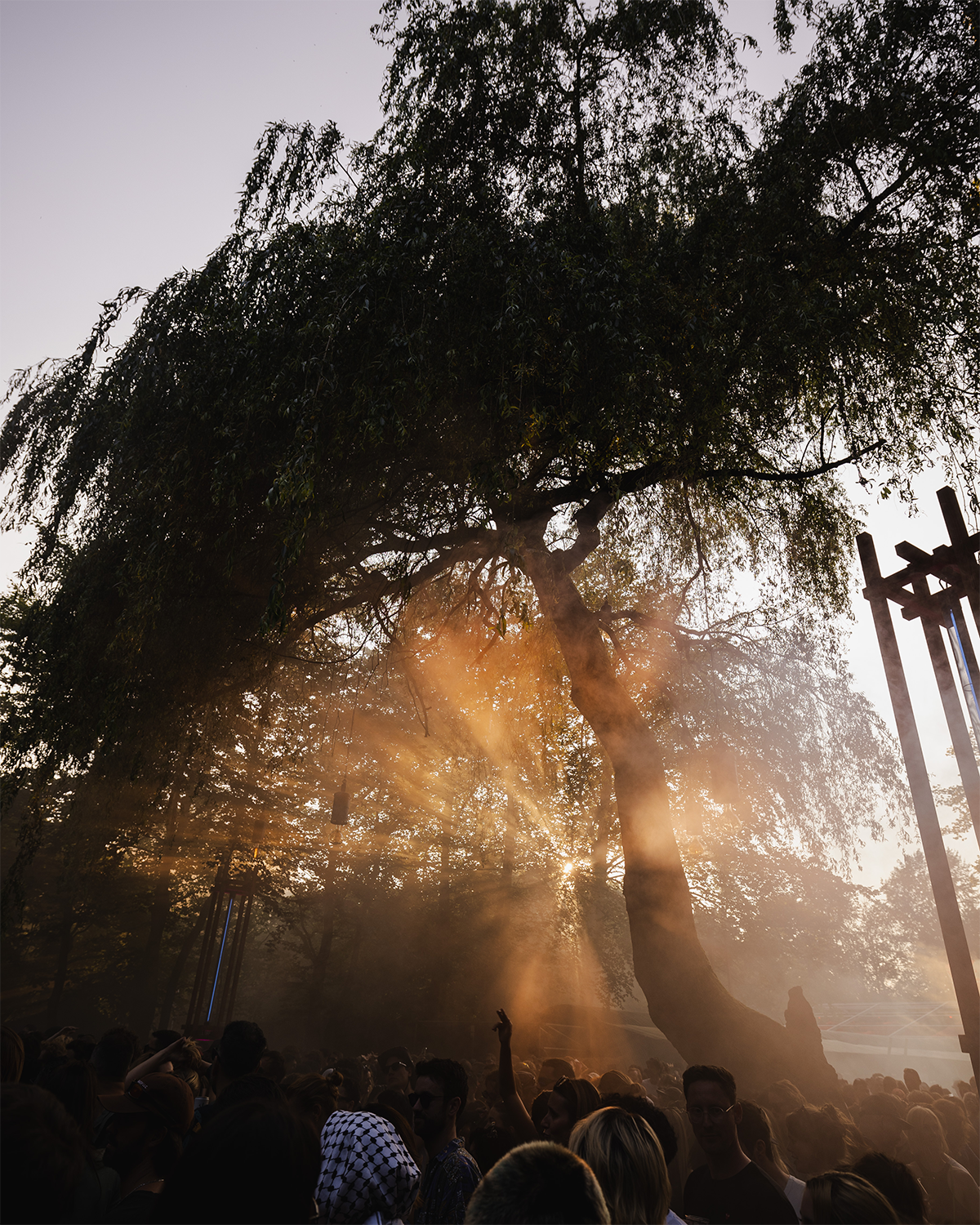
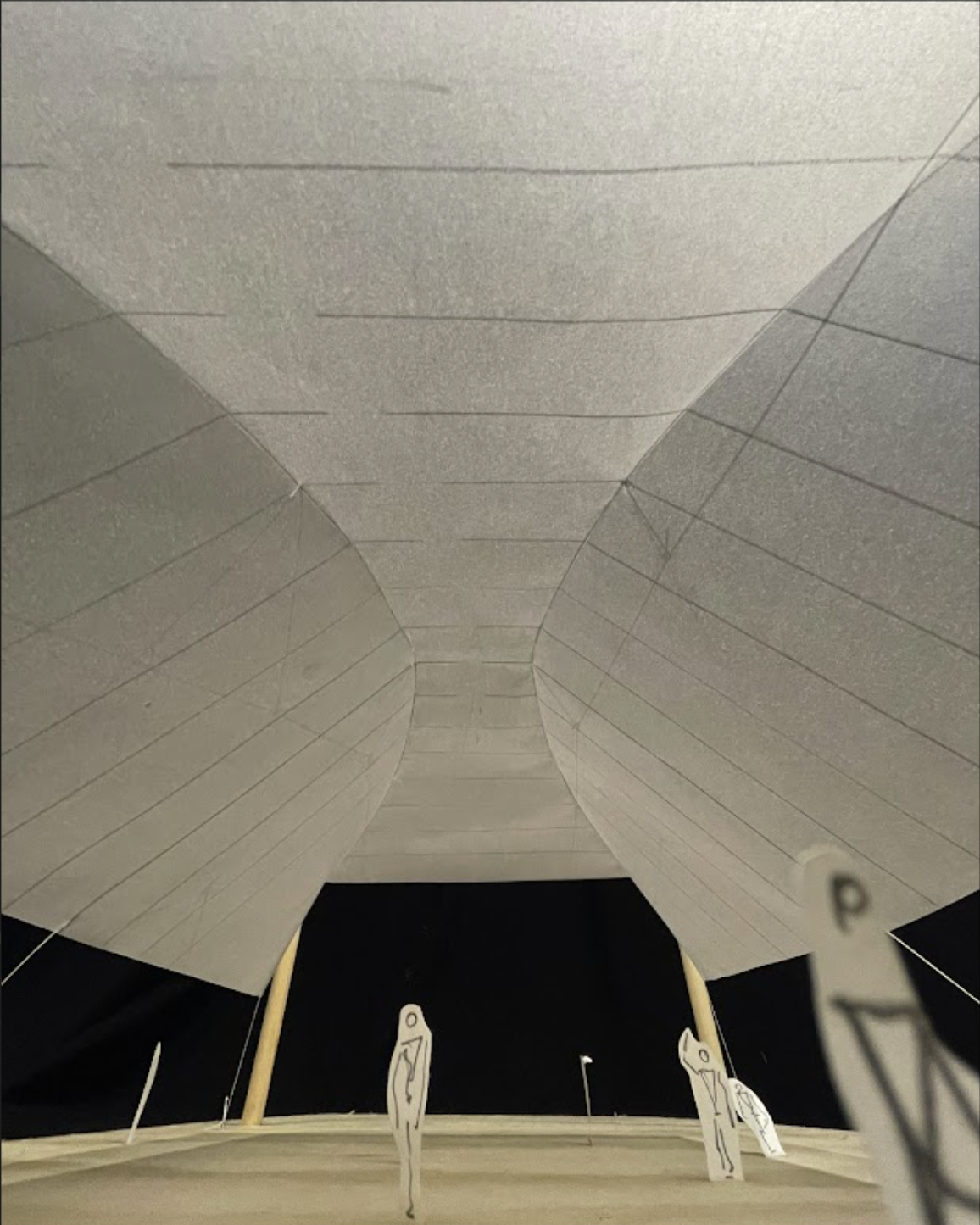
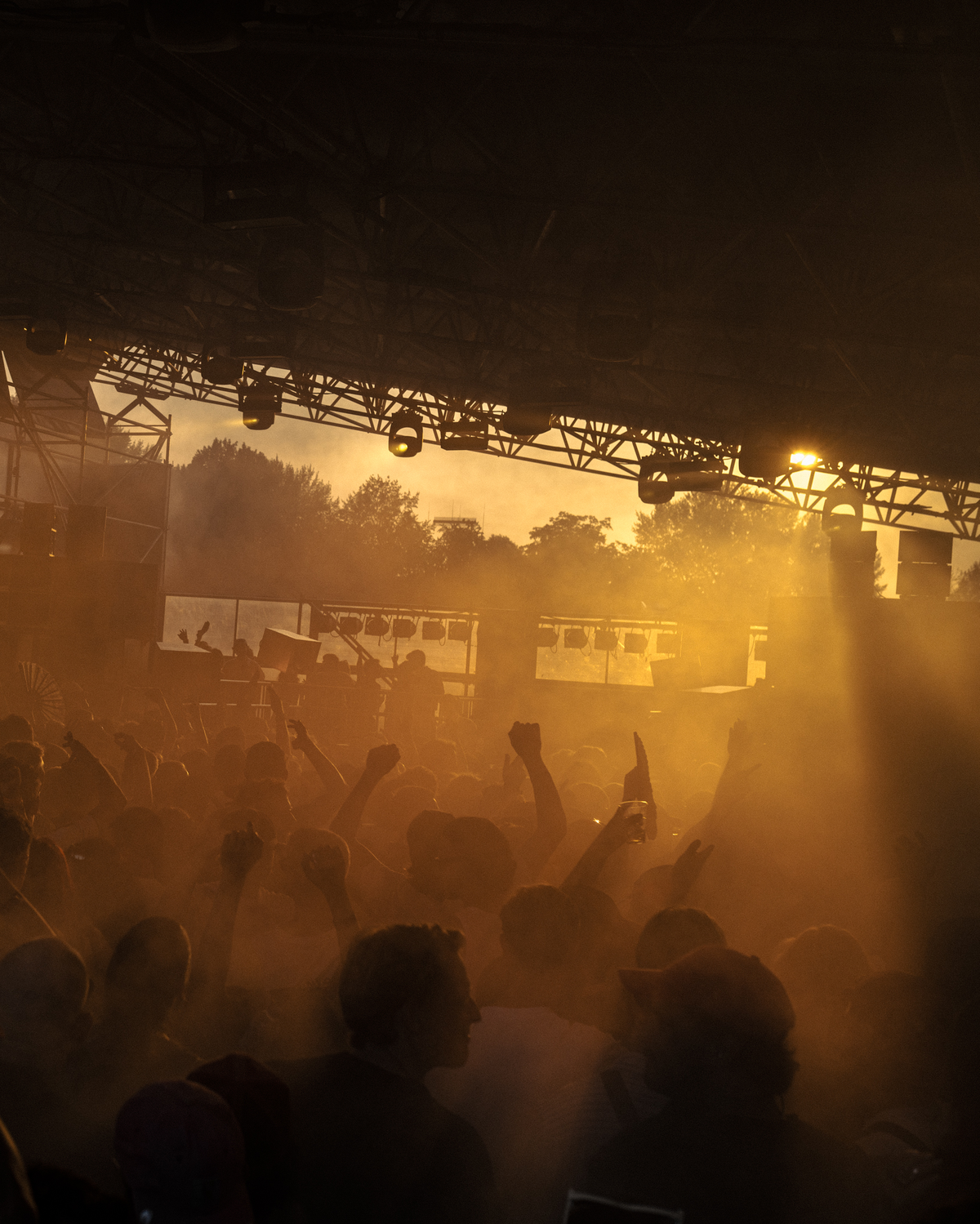
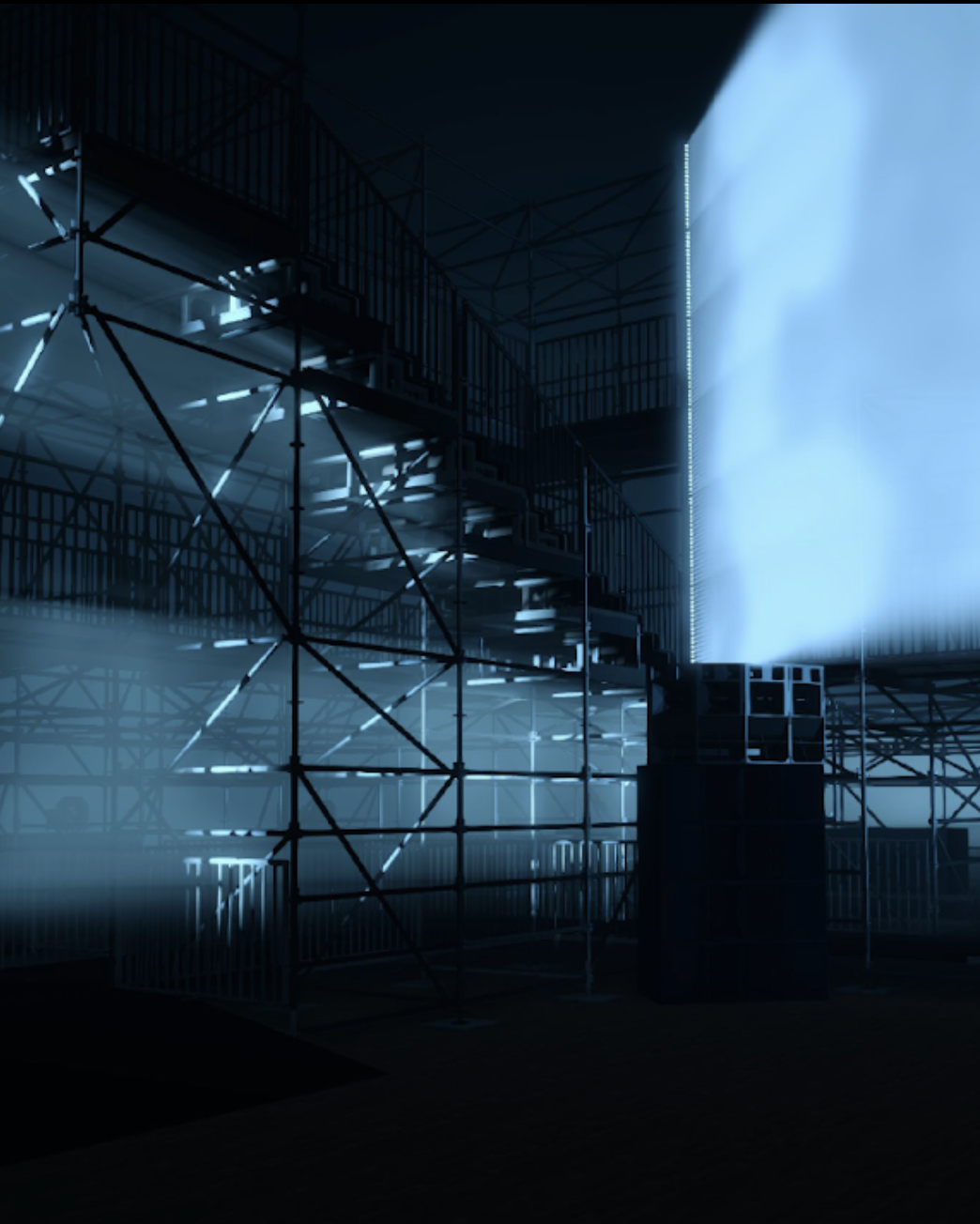
Mere minutes from the Greenhouse, nestled under the trees of the Amsterdamse Bos, lies another stage: a totally different destination, both in sight and sound, and one of the festival’s most memorable spots. That’s Selectors, of course—the hazy dance floor where sunlight filters through the forest at its own whim, moving in natural harmony with the marching feet below and the swaying branches overhead. “The Selectors stage is an undisputed Dekmantel favourite,” says Albert. “But this year, we’re finally doing something new! I think it’s one of the most exciting things we’ve been working on… I don’t want to share too much, but what I can tell you is that we’re collaborating with Studio Zelt to create a 12-meter-high stage cover. It will be fully transparent, because I believe that forest spot is the most beautiful in the entire festival site. Its natural beauty has to remain central, and that’s become the starting point for a new design. In a similar way, on the other side of the festival, we’ve been fine-tuning the scaffolding structure of The Nest to align with the position of the sun throughout the day—creating this unique interplay between scenography and the elements nature gives us. What makes things even more exciting, especially for the new Selectors cover, is that we’re using a material that’s never before been used in a festival context. It’s truly something new.”
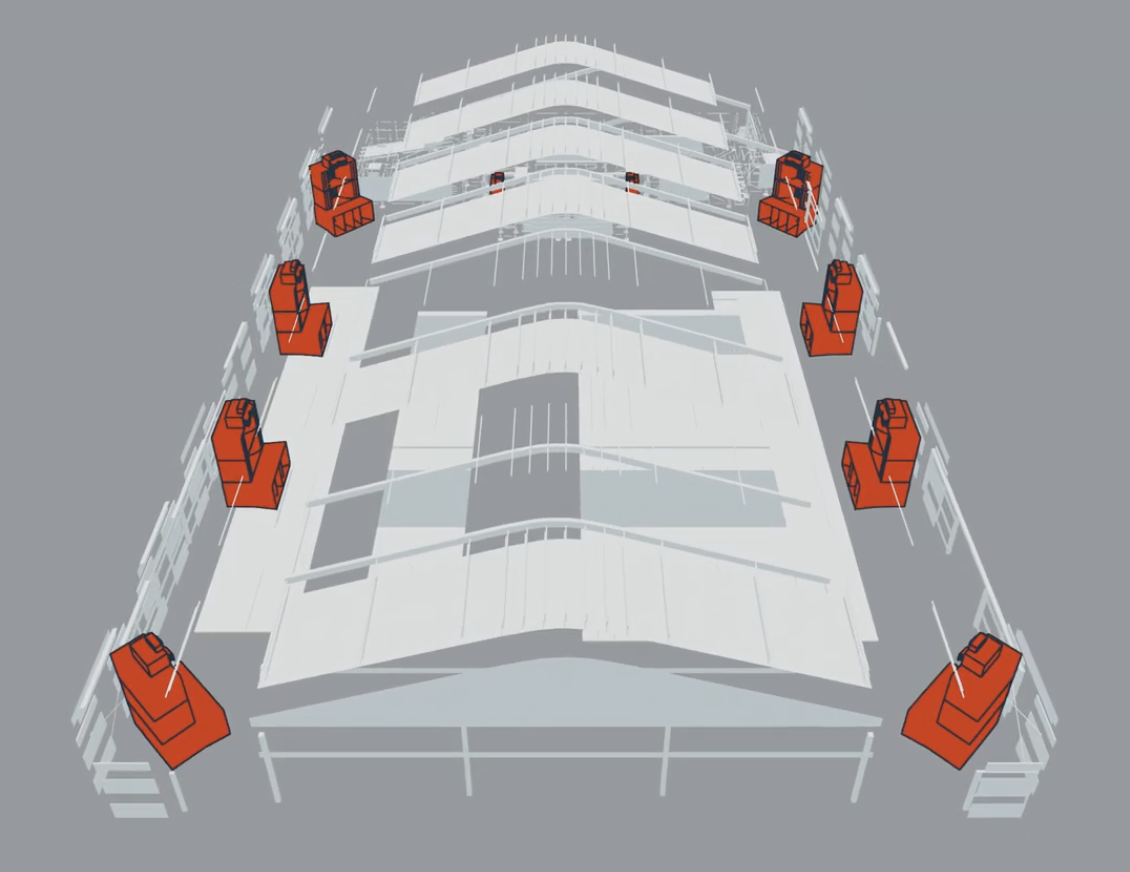
On a technological level, the possibilities in scenography and sound design are advancing at an exponential rate. Case in point: a light plan or sound setup that was considered highly advanced just a few years ago may be the standard today. “Remember that special feeling when you encountered Funktion-One for the first time?”, says David. “Now, it’s pretty much the go-to system.” So, where does that leave a festival known for its innovative curation? On a sound and scenography level, is it possible to constantly keep up—let alone stay ahead of the curve? “The most important thing is that we never stand still and don’t look back,” Albert says. “There are certain aspects of Dekmantel Festival that don’t change much, like the layout, simply because they work and sometimes they embody a certain heritage. That said, we challenge ourselves to keep pushing, to keep looking ahead. Last year, for example, we weren’t 100 percent happy with the UFO I sound. That means we’ve been working on a new sound system for this year’s edition, featuring a D&B KSL/GSL setup with ArrayProcessing. That’s next level. Also, working with forward-thinking creative partners such as Matière Noire and Children of the Light keeps the conversation sharp.”
"I can say without hesitation: our partners and this team are world-class." - Bróna Lynch
Someone who’s new to that Dekmantel Festival conversation, but who’s worked as a respected audio engineer at the highest global level, is Bróna Lynch. At this year’s edition, Bróna will be in charge of on-site audio quality and compliance—or, as she clarifies herself, “being the bridge between creative vision, technical excellence and legal responsibility.” The moment the music starts is the moment Bróna gets to work: from the first soundcheck to the final track. “In practice, I represent the festival’s commitment to audio excellence and compliance across all stages and sound areas. Having worked in over 30 countries as front-of-house engineer, technical director and technical producer, I can say without hesitation: our partners and this team are world-class.” That said, a festival environment will always present challenges: multiple stages in close proximity, neighbouring communities, shifting weather conditions, volume restrictions—the list goes on. “Unlike a contained venue, at a festival you’re constantly negotiating shared air, shared boundaries and shared responsibility,” says Bróna. “Sound system design may vary by area but the principle remains: the system should be honest and responsive, not overcooked or overly coloured. It should be tamed enough to behave with balance across frequencies in relation to the space—allowing for real impact to be felt in the body, not just heard in the ears.”
When asked about the relationship between progressive, high-quality music curation and audio engineering, Bróna stresses two key layers. First of all, there’s the initial system configuration and tuning: “I don’t necessarily believe in tuning a system to a genre. I believe in tuning a system for balance, headroom and openness—such that any genre will perform with clarity, weight and emotion. We’re not here to narrow the range, we’re here to provide the conditions for anything the artist brings, including the unexpected, to hit with full force.” Secondly, there is the work of the front-of-house engineers, who anticipate on both the physical space and the source material coming from the artist in the moment. “They bring a separate set of tools and skills to the process, working on top of the tuned system to adapt for genre, artistic intention and stylistic nuance. So, when there’s an attuned awareness of that triad—space, system and source—the conditions are in place for a coherent, high-impact experience.” As an audio expert who’s handled thousands of performance spaces, how would Bróna describe the link between sound and scenography? “Scenography directly affects sound!” she affirms. “It shapes the space, and the space shapes how sound behaves. Stage design is never neutral: it impacts how the energy moves, and how the system performs. Each context requires a different kind of sonic architecture. In the end, the goal is to have all these moving parts working in alignment to support the world-building intent of each area.”
"With every design, I ask myself: which elements can be removed to make it stronger? I’m interested in telling our own story, both through grand gestures and through subtle design choices you might not even notice at first sight." - Albert van Abbe
Looking towards the future of festival design, one in which sonic and scenographic technologies will only become more advanced, the question remains: what’s next? “Of course we keep a close eye on the latest tech possibilities,” ponders Albert. “The more colours or brushes a painter owns, the more ways he can express himself, right? At the same time, it’s easy to lose yourself in those tools—or the spectacle of those tools—rather than shaping your own creative path. With every design, I ask myself: which elements can be removed to make it stronger? I’m interested in telling our own story, both through grand gestures and through subtle design choices you might not even notice at first sight. Yes, I’m interested in material innovation, for instance in the way we can now combine transparent LED with light to create new, high-tech visuals. But I’m just as interested in repurposing everyday materials like stacked concrete or simple scaffolding in a festival context. When it comes to Dekmantel Festival, many of the stage shapes are proven, time-transcending classics—our goal, from there, is to keep evolving and finetuning them. I’ve noticed that festival stages these days are extremely stark and symmetrical, with the artist placed on a central pedestal. What I find much more interesting is finding balance in asymmetry. If anything, I believe the future is less rigid, a little softer, more rounded and less masculine. Closer to the ground; closer to the people.”